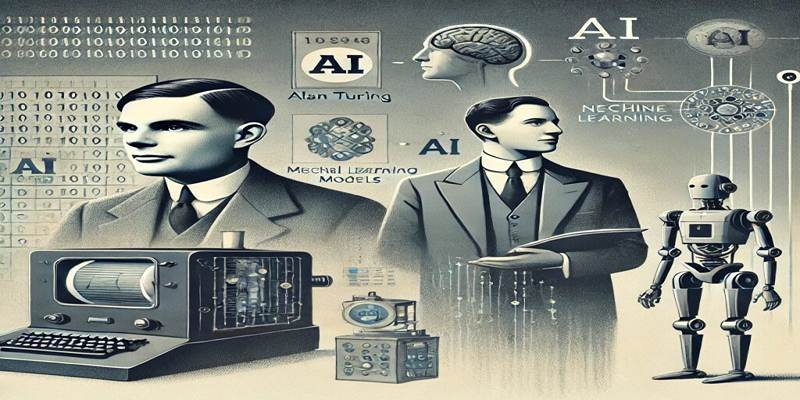
For decades, people who study artificial intelligence have been asking if computers can think like people. You may have heard of the Turing Test, which is one of the most famous ways to examine this question. This test, created by the British mathematician Alan Turing, makes us think about what it means for a machine to "think." If computers are made to think like humans, do they really think? The Turing Test, its goal, its limits, and its importance in knowing what machine intelligence is will be talked about in this post.
What is the Turing Test?
The Turing Test is a way to see if a machine can behave intelligently in a way that is either the same as or impossible to tell apart from human behavior. Turing came up with the test in 1950. It includes a human judge who talks to both a computer and a person through text messages.
Based on the answers, the evaluator's job is to figure out which member is a machine and which is a person. If the person testing the machine can't tell the difference between the two, it is said to have "passed" the Turing Test. The test doesn't look at how the machine works on the inside; instead, it checks to see if it can respond like a person. It is now one of the most important ideas in the area of artificial intelligence.
The Purpose of the Turing Test
The purpose of the Turing Test is to answer the question, "Can machines think?" Instead of using a narrow definition of thought, Turing suggested that how well a machine can copy human behavior could be used to judge its intelligence. The test encourages us to rethink what "thinking" means in the context of machines. Do you think a machine can think if it can have a talk so clearly that a person wouldn't be able to tell the difference between it and another person?
Turing’s idea was to move away from trying to define human-like thought and instead measure a machine's ability to mimic intelligent behavior. It opens the door to new ways of thinking about artificial intelligence and its potential.
Can Machines Truly Think Like Humans?

While the Turing Test is a valuable tool for evaluating machine intelligence, it does not answer whether machines can truly think in the same way humans do. Machines can be programmed to simulate thought processes, such as answering questions, recognizing patterns, and making decisions based on data. However, true human thinking involves emotions, consciousness, and subjective experience, which machines do not possess.
Machines are not aware of their actions and cannot experience the world or make decisions based on emotions or personal experiences. Instead, they rely on algorithms and predefined programming to guide their behavior. So, while machines can exhibit behaviors that mimic human thinking, they do not "think" in the same way humans do. It leads us to question whether passing the Turing Test really indicates true intelligence or just an impressive simulation of it.
How Does the Turing Test Work?
The Turing Test is conducted in a controlled environment where a human evaluator communicates with both a machine and a human through text. The evaluator asks questions and receives answers from both participants. After a set period of interaction, The person doing the evaluation has to pick out which member is a machine and which is a person.
The success of the Turing Test is measured by whether the evaluator can reliably identify the machine. If the evaluator is unsure or unable to distinguish between the two, the machine is said to have passed the test. The goal is not to determine if the machine has consciousness but rather whether it can produce responses that seem intelligent to a human observer. Over time, the Turing Test has been refined and adapted, but its core purpose remains the same: to assess whether a machine can imitate human-like behavior convincingly.
The Limitations of the Turing Test
Although the Turing Test is a significant milestone in the study of artificial intelligence, it has several limitations. One of the main criticisms is that it focuses purely on imitation, not true understanding. A machine may be able to simulate intelligent conversation, but that doesn’t mean it actually understands the content of the conversation. For example, chatbots can provide appropriate responses to various queries, but they do not truly understand the nuances of the questions they answer.
Additionally, the Turing Test is based on subjective judgment. Different evaluators may have different criteria for what constitutes "intelligent" behavior. A machine that fools one evaluator may not be able to do the same with another, leading to inconsistencies in the evaluation.
Artificial Intelligence and the Turing Test
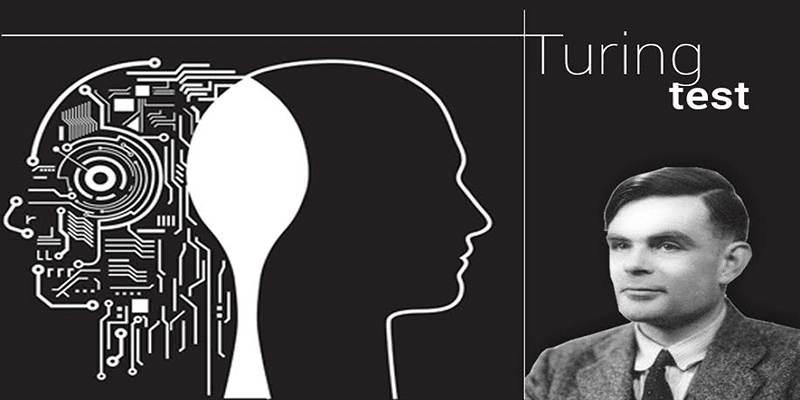
Artificial intelligence plays a central role in the Turing Test. AI technologies allow machines to learn from data, recognize patterns, and respond to inputs in ways that appear intelligent. However, while AI is advancing rapidly, it is still far from achieving true human-like thinking. AI can perform tasks like answering questions, translating languages, and identifying objects, but these abilities are limited to specific domains and are not indicative of general intelligence.
Conclusion
The Turing Test remains a cornerstone in the study of artificial intelligence, offering a way to measure whether machines can exhibit intelligent behavior similar to humans. However, passing the test does not necessarily mean a machine can truly think like a human. While AI can simulate human-like responses, it lacks consciousness, emotions, and subjective experience. The debate continues over whether machines can ever truly achieve human-like intelligence. For now, the Turing Test remains an important tool in understanding the capabilities and limitations of artificial intelligence.