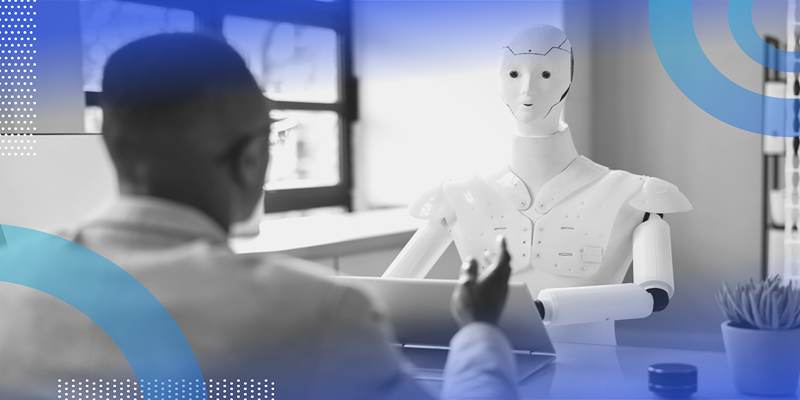
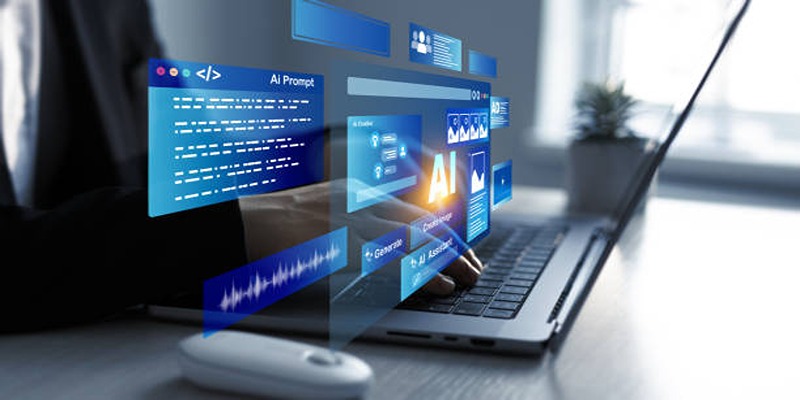
People's jobs are evolving with technology. Collaborative intelligence is when humans and artificial intelligence cooperate. This mix sharpens decision-making and efficiency. Humans offer creativity and judgment; artificial intelligence manages data. Many companies today use artificial intelligence to support rather than replace their employees. Better productivity and creativity follow from this. Artificial intelligence can handle customer service, data analysis, scheduling, and other chores.
First, one must understand how to incorporate artificial intelligence properly. Companies must equip staff members to apply artificial intelligence tools. They should also strike a balance between human effort and automation. Companies require well-defined plans for implementing artificial intelligence. Effective human-AI cooperation calls for training, openness, and trust. Done well, it results in improved performance. This article investigates how cooperative intelligence is revolutionizing companies.
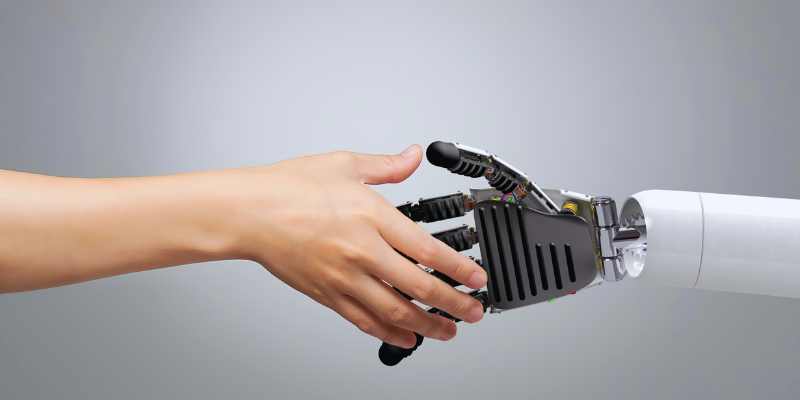
How AI Enhances Workplace Efficiency?
One very effective tool for raising efficiency is artificial intelligence. It lowers mistakes and runs through repetitious chores. AI-powered chatbots are being used in businesses for customer service. These chatbots save time by rapidly answering frequently asked inquiries. AI also facilitates data analysis. It can quickly process vast volumes of data far faster than humans. It facilitates companies' decision-making process. Tools driven by artificial intelligence help with inventory control, trend tracking, and sales forecasts.
Task automation is still another method of artificial intelligence that increases efficiency. Tools driven by artificial intelligence arrange meetings and create reminders. It lessens staff members' burden. By scanning and file structuring, artificial intelligence also facilitates document processing. As AI manages daily duties, staff members may concentrate on more advanced projects. They can give more time to developing strategies and fixing problems. It raises general, occupational output.
Human Strengths in AI Collaboration
Though it lacks human creativity, emotions, and judgment, artificial intelligence is valuable. People offer ethical decision-making and the ability to solve problems. Although artificial intelligence can propose answers, people choose the optimal path of action. Emotional intelligence is one of our strongest suits. AI finds human emotions difficult. In fields like customer service and healthcare, human empathy is vital. Using their emotions, employees interact with customers and offer individualized experiences. Crucially, humans also shine in critical thinking.
While humans consider events from many angles, artificial intelligence operates under set guidelines. Human judgment is crucial in legal or business choices. AI offers data; humans take ethical and social issues into account. Adaptability is still another virtue. While humans may learn and adapt to unanticipated events, artificial intelligence depends on training. Human employees are creative solvers and outside thinkers. These skills make people great collaborators in artificial intelligence projects.
Challenges of Human-AI Collaboration
Human-AI collaboration has difficulties, even with its advantages. Trust is one main difficulty. Workers might worry about AI taking their employment. They want comfort in the fact that artificial intelligence is a tool rather than a substitute. Another problem is the ignorance of artificial intelligence. Many employees are not conversant with AI tools. They might struggle to apply artificial intelligence properly without appropriate instruction. Businesses have to offer learning initiatives to enable staff members to change. Data privacy still raises another issue.
AI systems sort through vast volumes of private data. Companies have to ensure that information is safe and used sensibly. Openness in AI processes helps consumers and staff develop confidence. Making ethical decisions is another difficulty. Though it lacks knowledge of justice, artificial intelligence can make decisions based on data. Guidelines help businesses avoid artificial intelligence from making biased decisions. Human supervision of artificial intelligence judgments guarantees ethical results.
Best Practices for Effective Human-AI Integration
Businesses must adopt best practices if they are to maximize collaborative intelligence. The first phase is instruction. Workers should pick up the proper application of artificial intelligence tools. Training clarifies their strengths and limits as related to artificial intelligence. Companies should also pay great attention to well-defined roles. Workers must know which chores artificial intelligence will manage and which need human involvement. It guarantees flawless procedures and helps to eliminate uncertainty. Another essential component is transparency. Companies should clarify how artificial intelligence forms decisions.
Workers should know why artificial intelligence offers particular suggestions. It fosters AI system confidence. Promoting human supervision is vital. Not working alone, artificial intelligence should help people. People must examine AI-generated conclusions, particularly in critical sectors like finance and healthcare. Companies should thus encourage cooperation between employees and artificial intelligence developers. Employees can offer comments regarding artificial intelligence performance. It enables engineers to enhance artificial intelligence systems to meet human needs more.
The Future of Human-AI Partnerships
Human-AI cooperation has a bright future. Artificial intelligence is developing to become more sophisticated and practical. AI will be more important in offices in the next years. Personalizing driven by artificial intelligence is one main trend. AI will enable companies to deliver tailored services to clients. It will examine choices and offer customized recommendations. It will raise client happiness. AI will also enable remote employment. Virtual teams will be helped in project management and communication by smart AI tools. It will enable companies to run effectively all across several sites.
Another advancement is artificial intelligence guiding decisions. AI will offer a more in-depth understanding, guiding companies toward wise decisions. Still, human supervision will be vital. Businesses will have to weigh human judgment against AI recommendations. The requirement for ethical AI methods will increase as artificial intelligence develops. Companies have to guarantee the responsible and fair application of artificial intelligence. Guiding AI for ethical results will always be mostly dependent on human workers.
Conclusion:
Collaborative intelligence is revolutionizing companies. Although artificial intelligence improves efficiency, human strengths are still absolutely vital. The ideal outcomes derive from human ingenuity and artificial intelligence automation. Companies must prioritize training, openness, and ethical artificial intelligence applications. Workers should be sure they can apply artificial intelligence as a useful tool. AI is meant to streamline procedures, not replace employment. Good human-AI cooperation will determine how different work is going to be. Those businesses that adopt artificial intelligence sensibly will remain innovative leaders. Combining human talents with technology will help businesses to be more successful.